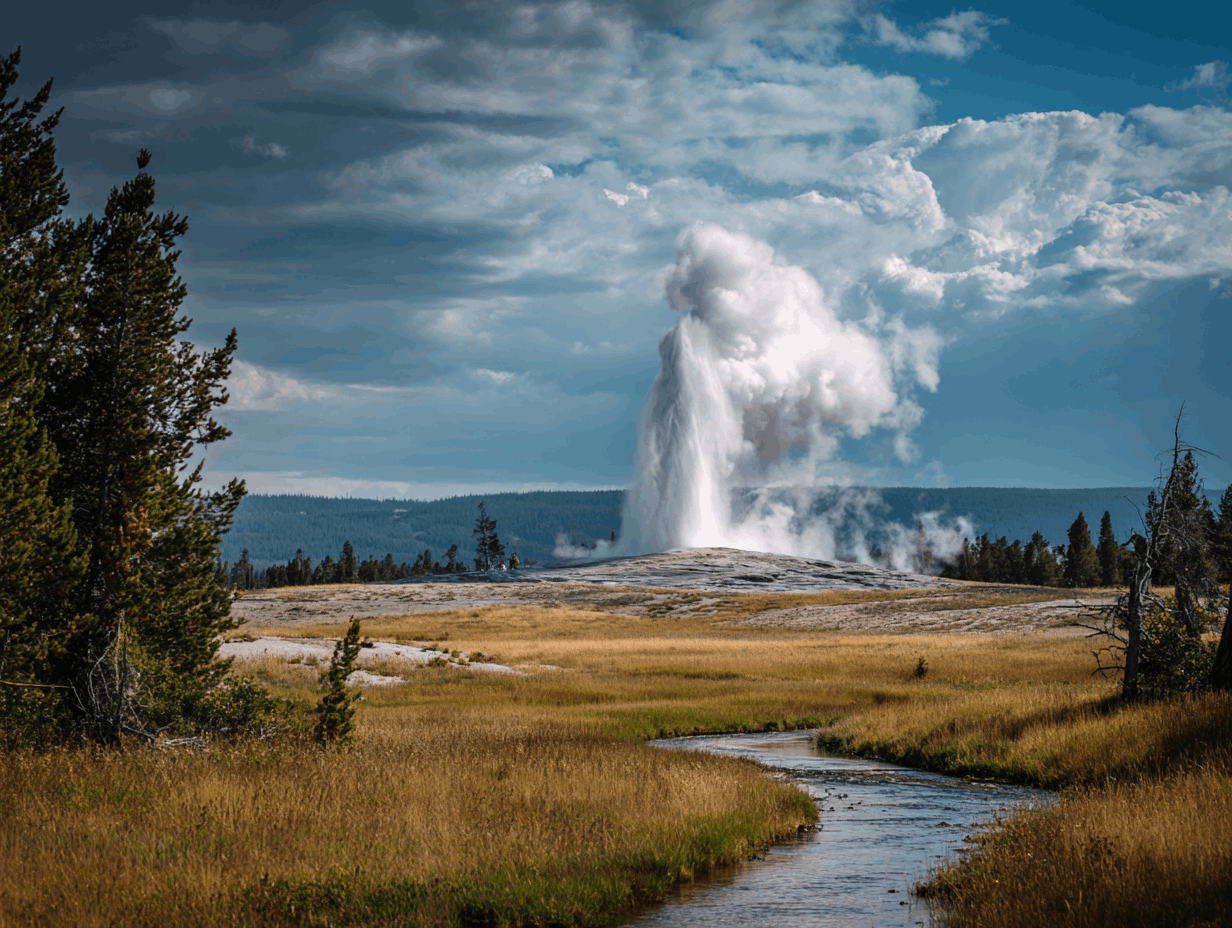
Yellowstone National Park is famous as the world’s very first national park. It surprises visitors with powerful geysers that shoot hot water high into the air, colorful hot springs, abundant wildlife roaming freely, and the deep dramatic Grand Canyon of the Yellowstone. This vast wilderness in the USA feels like stepping into another world full of raw natural power.
Why Visit
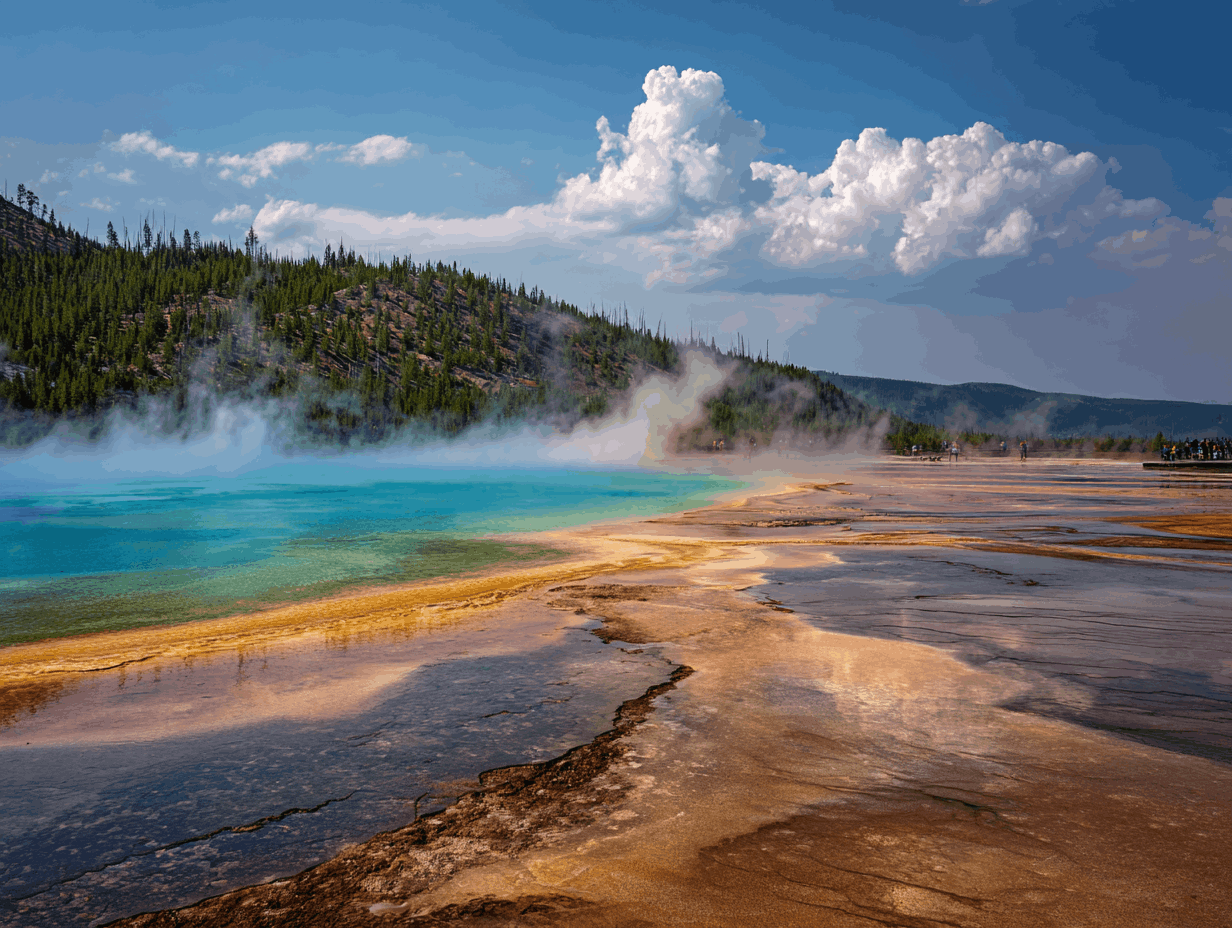
What makes Yellowstone truly unique is its incredible geothermal activity. Old Faithful is the most famous geyser, but there are hundreds more across the park. You can walk among steaming hot springs with water in every shade of blue, green and orange, watch bison and elk crossing the roads, and stand on the edge of a massive canyon with powerful waterfalls. Many people say Yellowstone gives you the feeling of being close to the living Earth itself, with its constant movement and surprising beauty everywhere you look.
How to Get There
Most visitors fly into Bozeman, Billings or Jackson Hole and then drive into the park. The main entrances are well marked and connected by the Grand Loop Road that forms a big figure-eight inside Yellowstone. Once inside, you can explore by private car, which gives the most flexibility, or join guided tours. There are several visitor centers that provide maps and current information about road conditions and geyser predictions.
Best Time to Visit
The peak season runs from June to early September when all roads are open and the weather is warmest. This is the best time for seeing wildlife and enjoying full access to hiking trails. July and August tend to be the busiest months. For fewer crowds and beautiful autumn colors, late September and early October are excellent choices. Winter visits offer a completely different experience with snow-covered landscapes and possible snowmobile or snowcoach tours, though many facilities are closed.
Tips & Reviews
Many travelers recommend checking the geyser prediction schedule at the visitor center so you don’t miss the major eruptions. Its important to stay on marked boardwalks and trails around thermal areas because the ground can be dangerously thin. Some visitors mentioned that bringing binoculars is very helpful for watching wildlife from a safe distance. Always keep a safe distance from animals and never feed them, no matter how close they come to the road.
Related Spots
While in the Yellowstone area you can easily combine your trip with nearby attractions. Grand Teton National Park lies just south of Yellowstone and offers sharp mountain peaks and beautiful lakes. The town of Jackson provides a nice base with shops and restaurants. Further west, the Craters of the Moon National Monument in Idaho gives another fascinating look at volcanic landscapes.
Join thousands of travelers discovering hidden gems and must-visit destinations.